
Where Should a Porta Potty Go on a Job Site?
Start with ground that will not shift. Standard porta potty rental units weigh more once the 60 to 70 gallon tank starts filling, and a soft or sloped pad lets the whole thing lean. Keep it away from storm drains and low spots that pool water after Colorado's spring runoff. Service trucks need a straight approach, so leave a path clear the way you would for roll-off dumpster rental trucks, which need about 60 feet of straight clearance behind the truck to set or pull a box. If the unit sits near a work zone with scaffolding or trenching, OSHA 1926.25 housekeeping rules still apply to the path leading to it, so keep debris clear. For construction site services in Lakewood, we walk the site with you before drop-off and mark the spot together, which saves a second trip.
Can a Porta Potty Sit in a Driveway or on the Street?
It can sit in a driveway on private property without much trouble, but placement in the public right of way needs confirming with the city before you commit to it. Lakewood has not published a standard fee schedule we can quote here, so treat any dumpster placement permit cost or porta potty permit requirements as something to confirm directly with the city rather than assume. The same caution applies to a temporary fence rental or storage container rental that might extend past the property line. If you are working a curb lane or sidewalk edge anywhere from Lakewood out toward Wheat Ridge, 5.8 miles north, or Golden, 9.2 miles northwest, call the city first. Our porta potty permit requirements page walks through what to ask when you call.
What Clearance Does an ADA Unit Need?
An ADA unit needs real room to work, not just to sit there. ADA Standards section 304.3.1 calls for a 60 inch turning circle inside, and the approach path needs a 36 inch clear width under ADA Standards section 403.5.1. Door openings must clear 32 inches per ADA Standards section 404.2.3, and reach to controls has to stay within the 48 inch high, 15 inch low range set out in ADA Standards section 308.2.1. Where several single-user units cluster on one site, ADA Standards section 213.2 requires at least 5 percent to be accessible, never fewer than one. Ramps leading up to a raised platform version can't exceed a 1:12 slope under ADA Standards section 405.2. Our ADA accessible porta potty page covers unit specifics, and ADA restroom requirements breaks down the whole standard for event planners and contractors alike.
How Many Units Does the Site Actually Need?
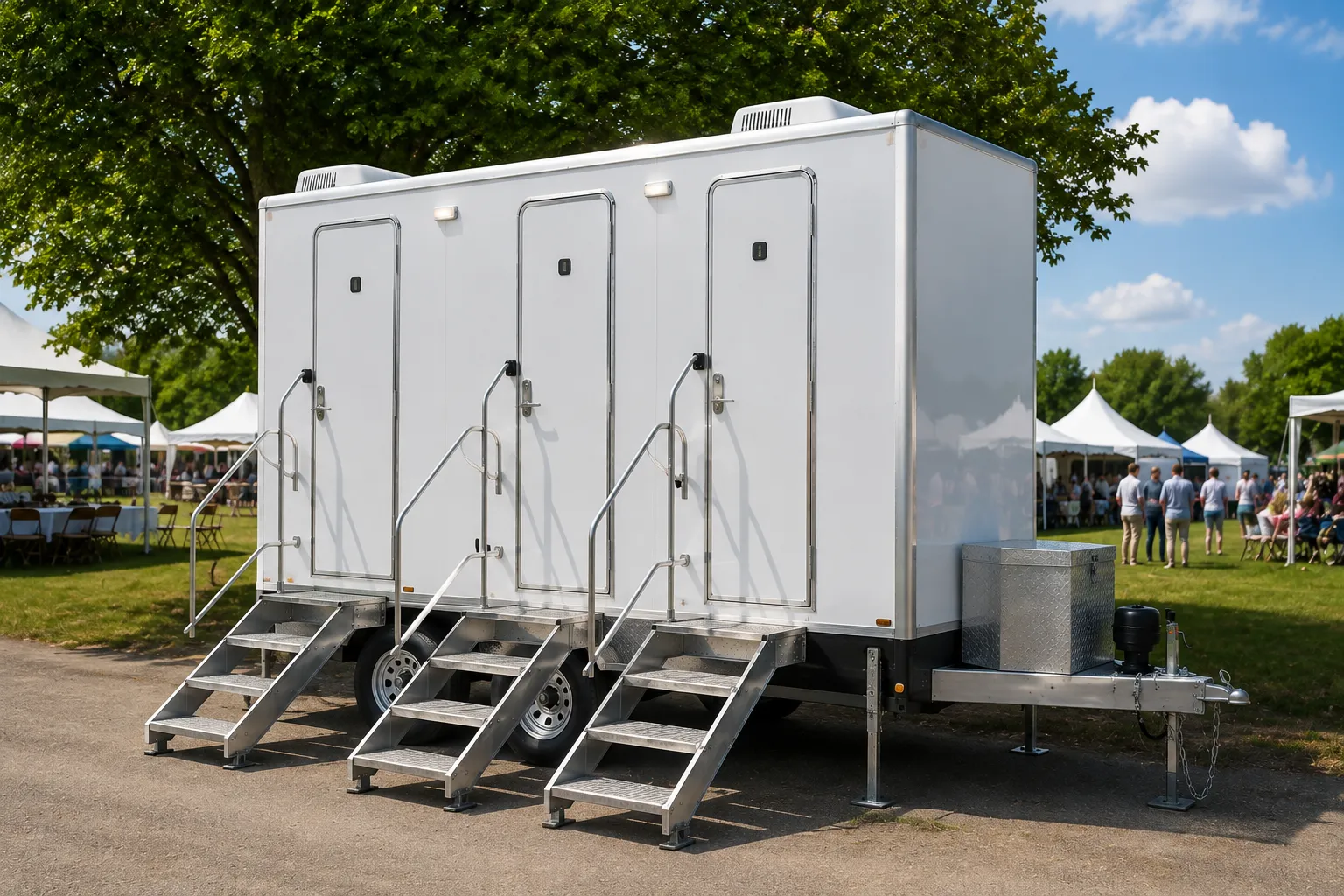
Crew size drives the count more than site size does. OSHA 1926.51(c)(1) sets the baseline for construction: one toilet for 20 workers or fewer, then a toilet and a urinal per 40 workers once you pass 20, dropping to one per 50 at 200 workers and up. Farm crews fall under a different rule, OSHA 1928.110, which calls for one facility per 20 hand-labor employees within a quarter mile walk, useful for farm and agricultural restrooms work near Lakewood's edges. ANSI/PSAI Z4.3 sets the baseline service interval at once a week for up to 10 users over a 40 hour week, which is why placement near a clear access road matters for the pump truck as much as for workers. Our how many porta potties do I need guide runs the math by crew size, and OSHA portable toilet requirements covers the full ratio table.
Rental costs shift with duration and unit type, which affects where placement decisions get made early versus late in a project.
| unit | day | week | month |
|---|---|---|---|
| standard | $100-$350 | $130-$500 | $125-$325 |
| ada | $200-$400 | $240-$400 | n/a |
| deluxe | $85-$1200 | $150-$290 | n/a |
See porta potty rental cost and monthly porta potty rental for the full breakdown, or porta potty rental per day if you're pricing a short job.
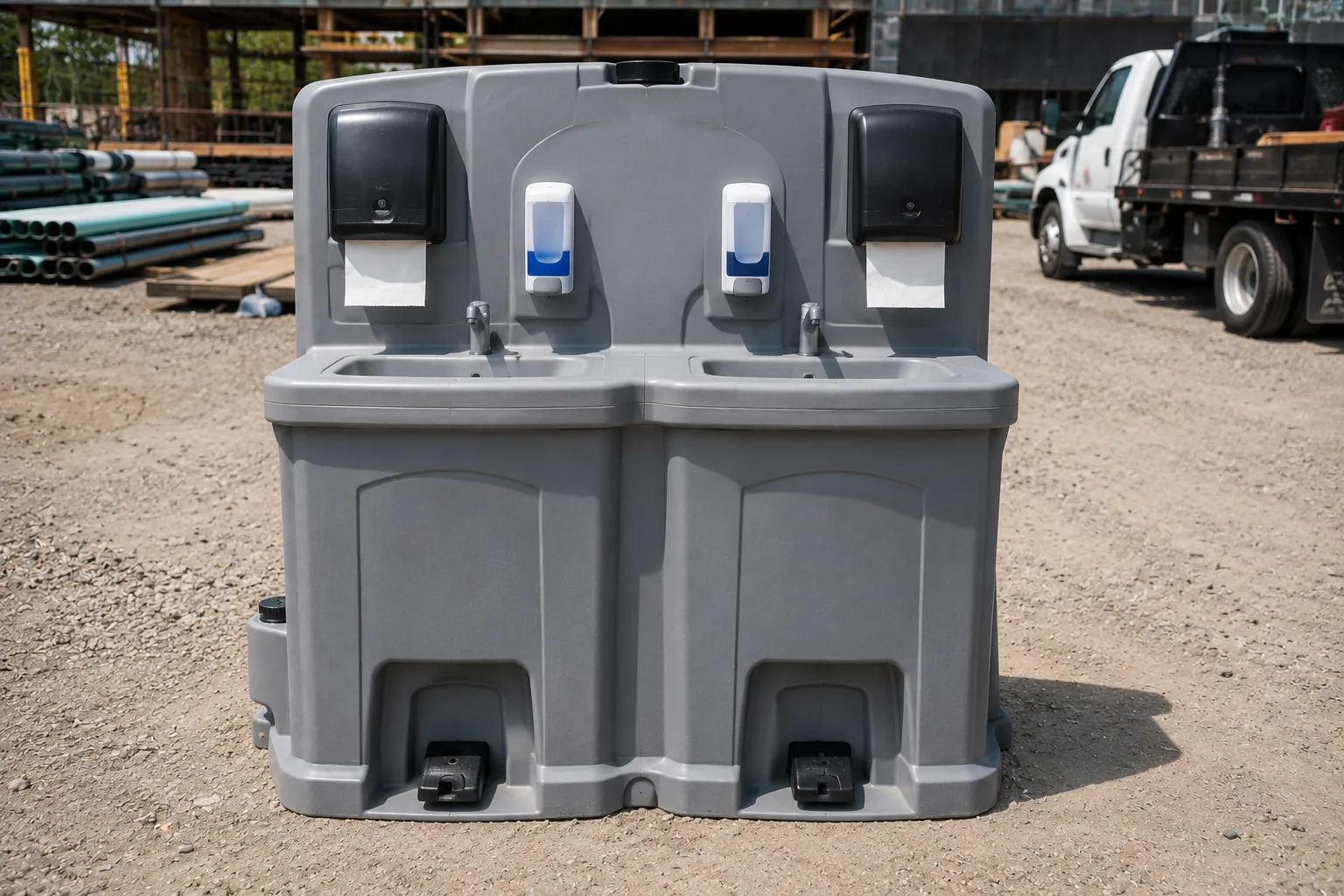
Placement questions come up on adjacent equipment too. A handwashing station rental needs its own flat pad near food service or paint work, since OSHA 1926.51(f)(1) requires washing facilities specifically where employees apply paints, coatings, herbicides or insecticides. If a portable sink on site needs parts, ozark river portable sink replacement parts are something to source through the sink manufacturer rather than guess at, and we can point you toward the right contact when we deliver. A mobile office trailer rental placed nearby should leave its own service clearance, and mobile office trailer replacement doors are a manufacturer part, not something we stock, so flag any damage at delivery. None of this is unique to Lakewood. A septic company as far off as placerville septic pumping service would tell a customer the same thing about flat ground and truck access, because tank trucks all need the same kind of approach.
How far from the work area can a unit sit?
Closer is better. Within 100 feet keeps trips short and compliance simple under OSHA 1926.51(c). Farther placements are fine on large sites as long as workers can reach a unit without cutting through active work zones or hazard areas.
Does a porta potty need a hard, level pad?
Yes. A tilted or soft surface risks tipping once the tank fills, and ANSI/PSAI Z4.3 service crews need stable footing to service the unit safely. Gravel, concrete or packed dirt all work if they're flat.
Can I place a unit near a septic tank or leach field?
Avoid it. Heavy foot traffic and service truck weight can compress a leach field. A typical residential septic tank gets pumped every 3 to 5 years, and keeping equipment off that ground protects the system. See septic pumping service for tank care.
Do I need a permit to place a dumpster on the street?
Possibly. Lakewood has not published a fee schedule we can cite here, so confirm directly with the city before placement. See dumpster permit requirements for the questions to ask.
What if the site has no flat ground at all?
Ask about leveling options or a different footprint. We've placed units on packed gravel pads across sites from Lakewood to Arvada, 11.8 miles north, and can recommend a workaround during the site walk.
Next step
Get a delivery date
Tell us the address, the dates and the headcount. We size the order and confirm the route.