
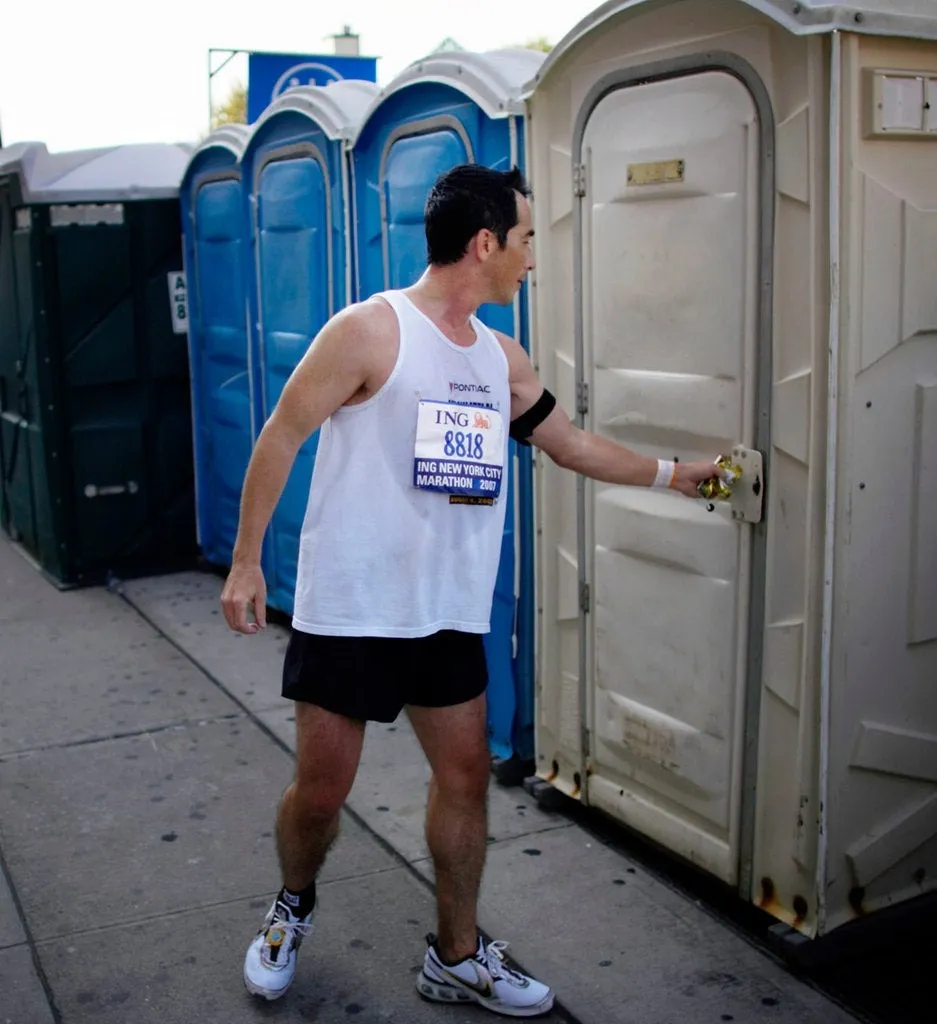
How many restrooms does a race need?
Start with runner count and course layout, not a flat guess. OSHA's 1926.51(c) ratio for construction crews (one toilet per 20 workers) is a reasonable floor for race organizers too, though foot traffic at a start line spikes harder than a job site ever does. For a typical 500-runner event, plan clusters at the start, the finish, and each aid station rather than one big bank in one spot. Our how many porta potties do I need guide breaks this down by headcount, but races have a wrinkle construction sites don't: everyone needs a restroom in the same 20-minute window before the gun goes off. That means more units per capita than an all-day festival, concentrated at the start.
Courses that loop back through the same neighborhood, common in Lakewood races that stage near parks, can reuse a cluster at both the 2-mile and 8-mile marks if the route design allows it. If your event draws a paratriathlon field or has any ADA obligation, ADA Standards section 213.2 requires that at least 5 percent of clustered single-user units be accessible, with a minimum of one no matter how small the cluster. See our ADA accessible porta potty page for specs, and our event restroom rental page for full-event planning beyond just the toilets.
Where should units go on a race course?
Units belong at the start line, the finish chute, and any aid station with a water stop or medical tent, not scattered randomly along the route. A standard unit runs about 44 by 48 inches on the ground and needs a flat, stable spot for delivery, which rules out steep shoulders or loose gravel turnouts common on rural stretches of a course. Our porta potty placement guide covers ground clearance and how far a unit can sit from a road for our trucks to service it.
Race organizers running through Lakewood streets should also think about power. Timing tents, PA systems, and finish-line video boards often need a temporary power pole rather than a generator daisy chain. Knowing how to brace a temporary power pole matters here: guy it at two points minimum, anchor the base plate so wind and foot traffic near a crowded finish chute can't tip it, and keep the load side clear of the corral fencing. Our temporary power pole page has more on service sizing. Pair power planning with temporary fence rental or crowd control barrier rental to keep spectators off the course and away from equipment.
For events that want something nicer than a standard unit at the finish line, especially for VIP tents or sponsor areas, a deluxe flushable porta potty or a compact restroom trailer rental upgrades the experience without complicating placement. A 2 stall restroom trailer fits in most staging areas that a standard unit cluster would.
What does race-day restroom rental cost?
Pricing depends on unit type, how many days you need them staged, and whether it's a single-day race or a multi-day festival wrapped around it. Most Lakewood races run one to two days including setup and breakdown, which usually lands in weekend or event pricing rather than a straight daily rate.
| unit | duration | typical price |
|---|---|---|
| standard | weekend | $250 |
| standard | event | $400 |
| ada | weekend | $240 |
| deluxe | weekend | $250 (week rate; ask about event pricing) |
| trailer | weekend | $2,000 |
Delivery adds a separate fee, typically in the $125 to $540 range for a weekend depending on distance and access. Races staged near Golden, about 9.2 miles northwest, or Wheat Ridge, about 5.8 miles north, fall well within our normal delivery radius from Lakewood. See our porta potty rental cost page and restroom trailer rental cost page for full breakdowns, and request a request a quote once you know your headcount and course layout.
If your event straddles a holding tank need, for a beer garden or a multi-day festival village near the finish, a holding tank rental keeps grey water off the course and off the city's radar. And if a course event turns into a mess overnight, our emergency porta potty rental line runs for exactly that.
How far in advance should we book race restrooms?
Book as soon as your course and headcount are set, ideally 4 to 6 weeks out for a race over a few hundred runners. Popular race weekends fill delivery slots fast. Earlier booking also gives us time to walk the course for placement and confirm any city permit needs before race day.
Do we need ADA units for a public race?
Yes, if the race is open to the public. ADA Standards section 213.2 requires at least one accessible unit per cluster, and never less than 5 percent of units in any group. Plan for wheelchair racers and spectators, not just runners, when you set the count.
Can you deliver restrooms to a course that changes each mile?
Yes. We stage clusters at fixed points, start, finish, and aid stations, rather than moving units mid-race. Tell us your mile markers and expected crowd size at each, and we'll size each cluster separately based on runner flow.
What about handwashing at aid stations?
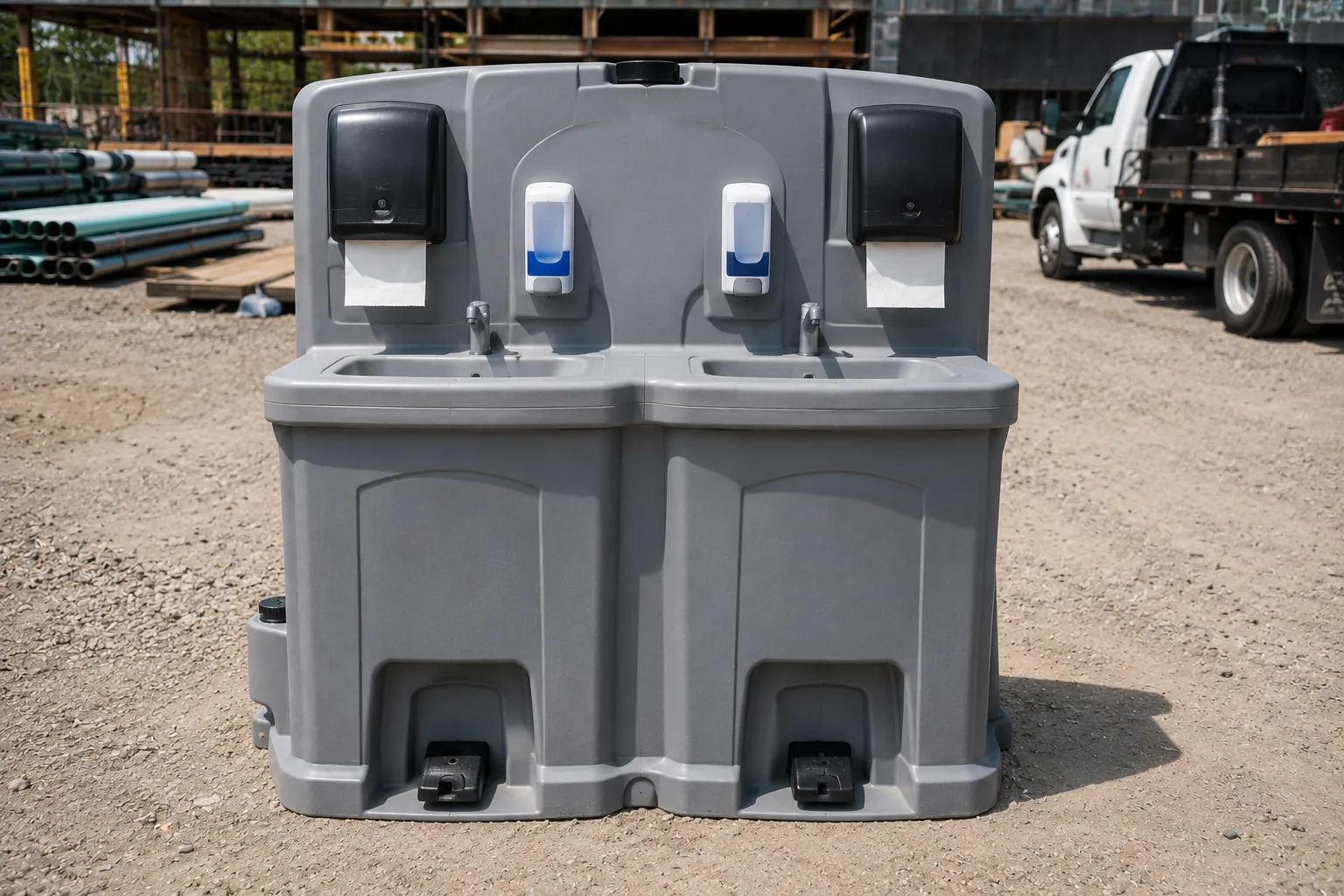
Handwashing stations pair well with any aid station serving food or gels. 29 CFR 1910.141(d)(2) requires soap and towels, not just sanitizer, at any washing facility. See our handwashing station rental page for unit specs and placement options.
Do we need a permit for restrooms on Lakewood streets?
Placement in the public right of way needs confirming with the city. We can flag this during course planning, but check with Lakewood directly before finalizing your layout. Our porta potty permit requirements page has general guidance while you sort out specifics.
Next step
Get a delivery date
Tell us the address, the dates and the headcount. We size the order and confirm the route.