
How many restrooms does a concert need in Lakewood?
Start with the OSHA 1926.51(c) construction ratio as your floor, then adjust up for alcohol. That standard calls for 1 toilet per 20 workers on a crew, and promoters use it as a baseline even though concertgoers are not employees. A 2,000 person show in Lakewood typically needs a mix of standard units and at least one ADA unit per ADA Standards section 213.2, which requires 5 percent of a cluster to be accessible with never fewer than one. Beer sales push demand hard. Crews that pour drinks for four hours see restroom lines double compared to a dry event, so we usually recommend rounding up rather than down. For a general headcount tool before you call us, run your numbers through how many porta potties do i need. Standard units run $200 to $800 for a single event day, and most concert bookings land in the event pricing band rather than a flat daily rate, since load-in, show time and teardown all fall on one calendar day. If your show has an accessible seating section, plan the walk from that section to the nearest ADA unit, since ADA Standards section 403.5.1 sets a 36 inch minimum clear width for the path itself, not just the door. Venues with fixed accessible parking need that route checked before gates open, not during soundcheck.
What restroom options work best for a concert crowd?
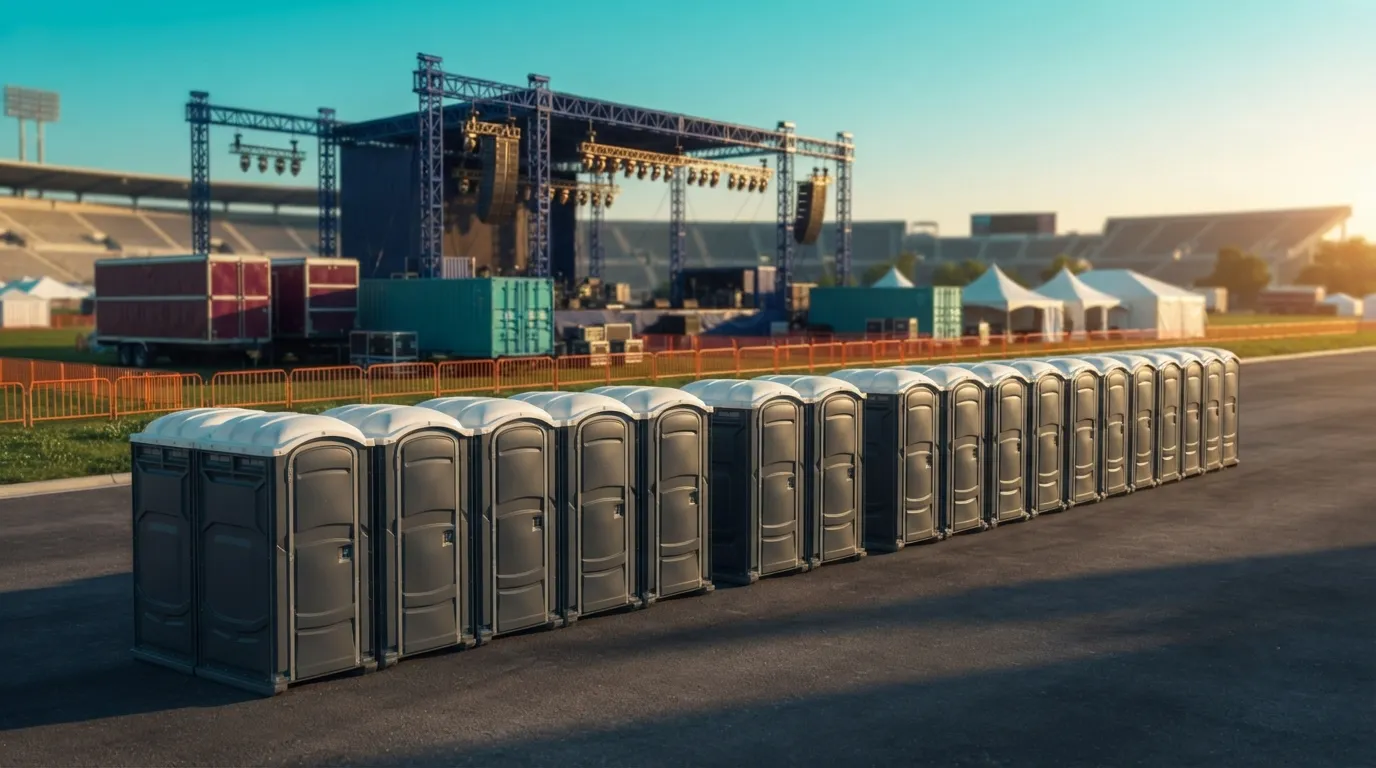
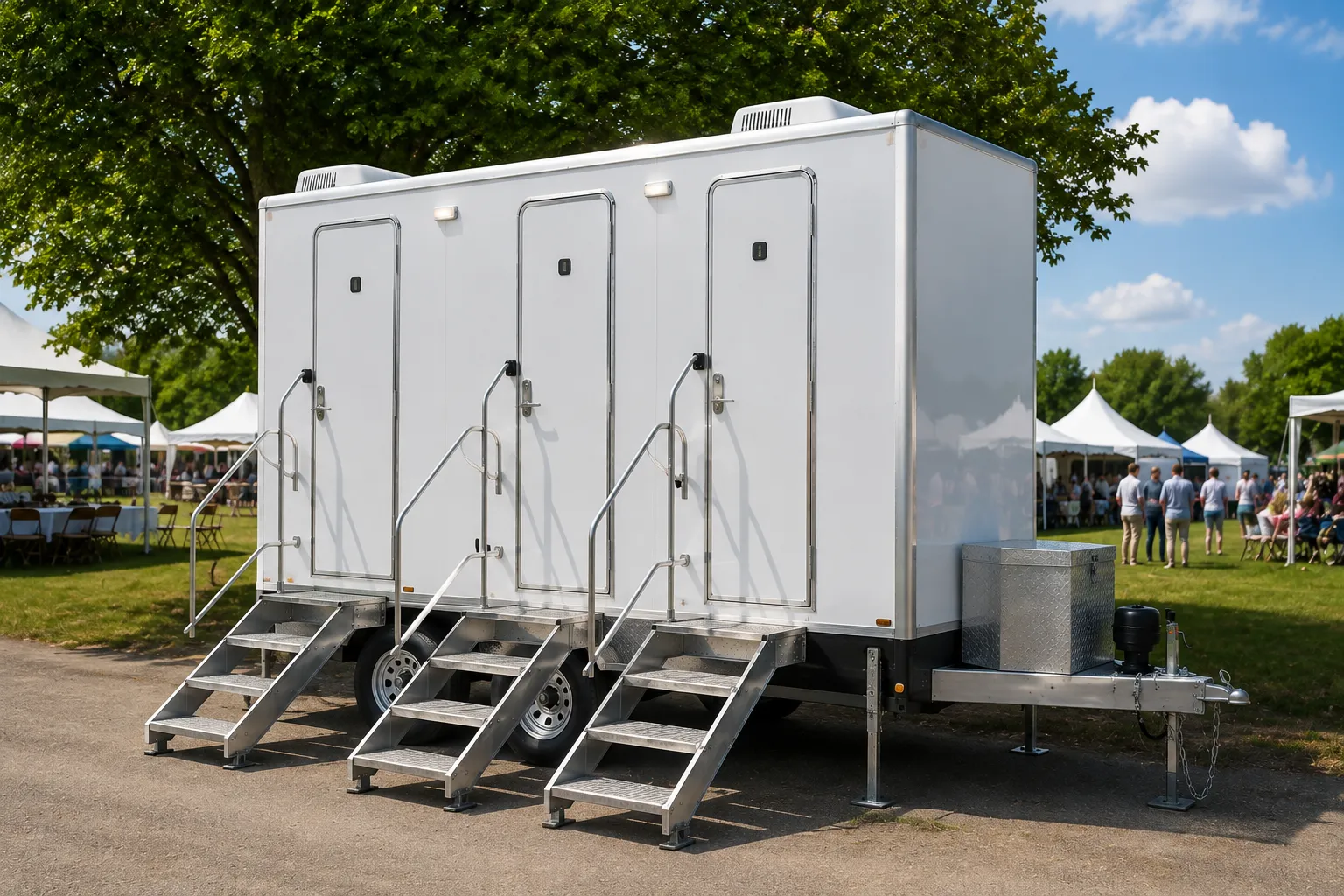
Standard units handle general admission fastest, but VIP areas and backstage need something nicer. A standard unit sits on a 44 by 48 inch footprint and stands about 92 inches tall, and a bank of eight to ten units clears a GA crowd of a few hundred people between sets without a bottleneck. For VIP tents, backstage catering or artist hospitality, a deluxe flushable unit or a full restroom trailer reads better and holds up under heavier use. An 8 stall restroom trailer can anchor a mid-size festival footprint while 2 stall and 4 stall units cover smaller VIP zones or crew areas. If the show includes food vendors cooking on-site, a grease trap pumping plan matters too, since fats, oils and grease get pumped once they hit 25 percent of the liquid depth in the interceptor. Crews handling paint or stage coatings during setup fall under OSHA 1926.51(f)(1), which requires washing facilities specifically for paint, coating, herbicide or insecticide work, not general crowd handwashing. For the crowd itself, 29 CFR 1910.141(d)(2) sets the standard that handwashing stations need actual soap and towels or a hand dryer, since sanitizer alone does not satisfy it. A weekend show adds delivery timing pressure too, and our restroom trailer rental cost guide breaks down weekend versus multi-day pricing so promoters are not guessing at load-in day.
Why does restroom placement matter more at a concert than other events?
Bad placement turns a restroom bank into a bottleneck that swallows an entire intermission. Units need level, stable ground per ADA Standards section 302.1, which calls for firm and slip resistant surfaces, and that matters on grass fields as much as parking lots. Delivery trucks also need roughly 60 feet of straight clearance behind them to place larger units or trailers, which rules out tight backstage alleys as a service road. If gates are staged in Lakewood proper, confirm placement in any public right of way with the city directly, since that rule was not verified for this page and should never be assumed. Crowd flow matters as much as code. Put restroom clusters along the natural walk from GA to concessions, not tucked behind a stage where nobody wanders. For multi-day festivals, temporary fencing around restroom banks keeps queues orderly and keeps foot traffic from cutting across cable runs. Lighting also matters once the sun drops. A light tower rental at each restroom bank meets the intent of OSHA 1926.56(a) illumination guidance for work areas and keeps patrons from tripping over guy-wires in the dark. Crews near Golden, roughly 9.2 miles northwest of Lakewood, and Wheat Ridge, about 5.8 miles north, use the same placement logic for outdoor amphitheater shows.
How far in advance should we book concert restrooms?
Book as soon as the date and expected attendance are set, ideally 30 to 60 days out for anything over 1,000 people. Trailers and ADA units book first. A request a quote submitted early locks in delivery slots before festival season fills the calendar.
Do concert restrooms need servicing during a multi-day event?
Yes. Multi-hour high-traffic use empties tanks faster than a normal event day. Ask about mid-event servicing when you book, especially for a three-day festival, so units do not run short before the last set ends.
Can we rent handwashing stations separately from restrooms?
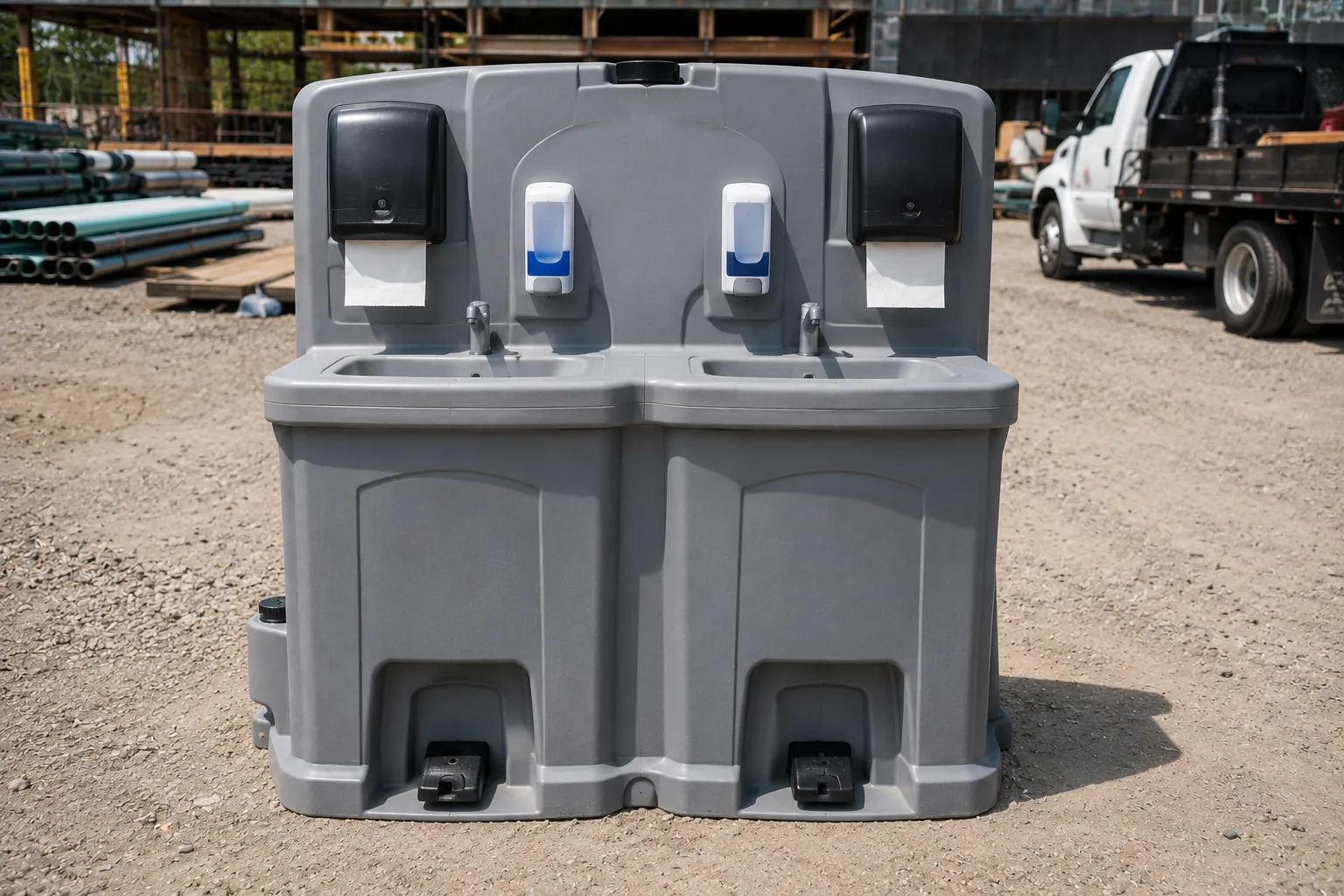
Yes. Many promoters add handwashing station rental units near food vendors and backstage catering, separate from the restroom count, since 29 CFR 1910.141(d)(2) requires actual soap and towels at those stations.
What if our concert runs into bad weather?
Portable units handle rain and wind fine when anchored properly. Cold weather changes servicing needs, and our porta potty in winter guide covers freeze protection for late-season outdoor shows in Lakewood.
Should we rent extra units for artist and crew areas?
Yes, separate from GA counts. Backstage crews and artists want faster access and more privacy, so a dedicated deluxe flushable unit or small trailer near the green room avoids mixing crew traffic with general admission lines.
Next step
Get a delivery date
Tell us the address, the dates and the headcount. We size the order and confirm the route.